What Is a Growth Operating System (and Why Your Business Needs One)
A Growth Operating System connects marketing, sales and operations into one measurable system. We explain what it is, how it works, and what it replaces.
Key Takeaways
- A Growth Operating System (Growth OS) is a unified infrastructure that connects marketing, sales, and operations into one measurable, automated system.
- Businesses that connect their marketing, sales, and operations into a single system tend to grow faster than those running disconnected tools, a principle supported by broader research on operating model effectiveness.
- A Growth OS replaces 5-12 disconnected subscriptions (CRM, email tool, booking system, analytics, ad manager) with one connected platform where data flows automatically.
- The three pillars of a Growth OS are Attract (generate demand), Convert (turn demand into customers), and Operate (deliver efficiently at scale).
- Implementation typically takes 4-8 weeks and requires 3-5 hours of leadership time per week during the build phase.
Most established businesses do not have a growth problem. They have a connection problem. Their website is built by one vendor. Their CRM is managed by another. Their advertising is handled by a third. Their operations run on a fourth tool. Each piece works in isolation. Together, they leak revenue at every handoff.
This is the problem a Growth Operating System solves. It is not another piece of software. It is a connected infrastructure that unifies how your business attracts, converts, and serves customers. In this article, we explain what a Growth Operating System is, how it works, and why established businesses generating £500K to £20M are increasingly adopting this model.
What Is a Growth Operating System?
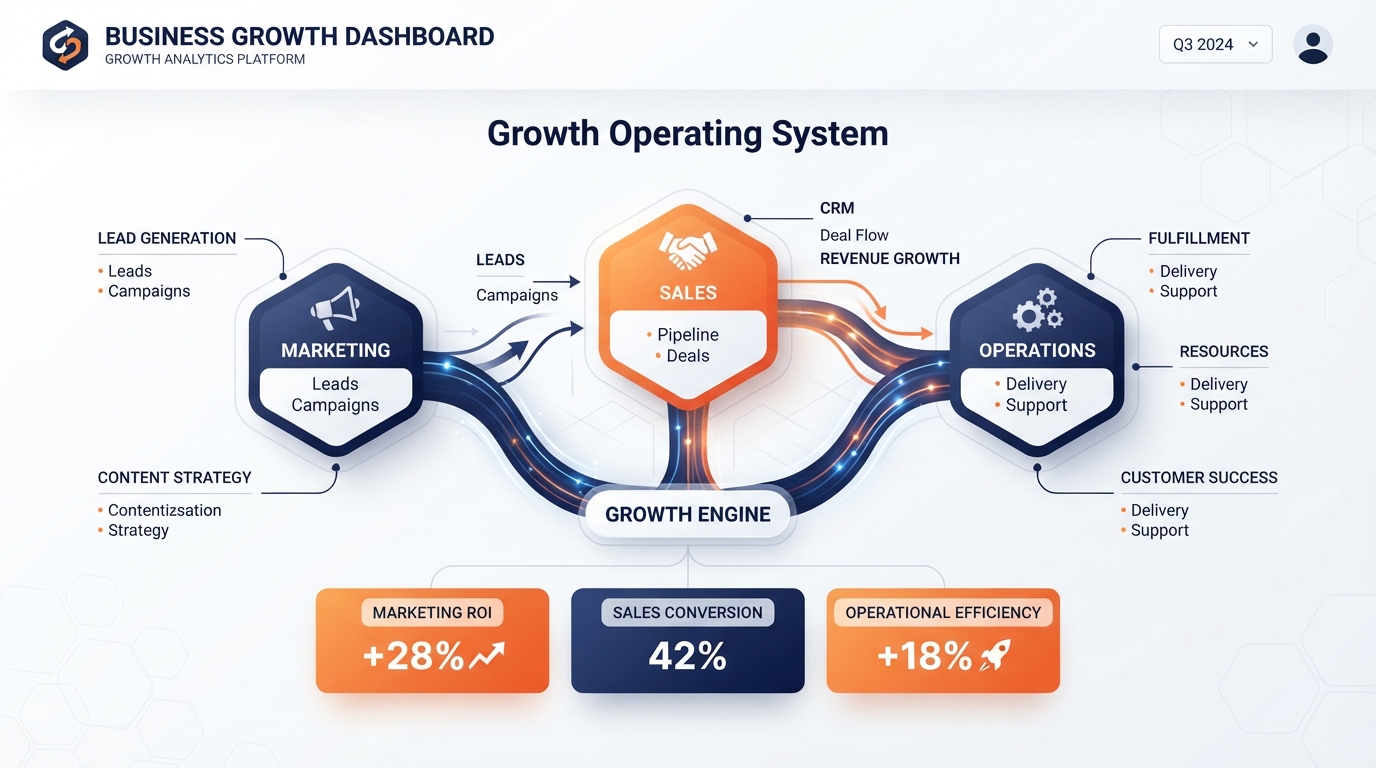
A Growth Operating System (Growth OS) is a unified business infrastructure that connects marketing, sales, and operations into a single, measurable system. The term draws from the broader concept of a business operating system, which McKinsey defines as the combination of strategy, structure, and management processes that determine how an organisation creates value and delivers it to customers.
In practice, a Growth OS replaces the patchwork of disconnected tools that most businesses use. Instead of a website that does not talk to your CRM, a CRM that does not talk to your calendar, and an ad account that does not talk to either, a Growth OS creates a single data layer where every customer interaction is tracked, measured, and acted on automatically.
The businesses that grow fastest are not the ones with the best individual tools. They are the ones whose tools talk to each other.
— Business Relauncher Growth Team
The Problem With Disconnected Systems
To understand why a Growth OS matters, consider how most established businesses actually run. A typical service business generating £2M annually might have the following stack:
- A website built on WordPress, managed by a web developer who responds in 3-5 days
- A CRM like HubSpot or Salesforce, used by the sales team but not connected to the website
- Google Ads managed by an external agency that reports on clicks, not revenue
- A booking system like Calendly or ServiceTitan that does not sync with the CRM
- An email marketing tool like Mailchimp that sends to a list exported manually from the CRM
- A spreadsheet tracking monthly revenue that someone updates by hand
- A phone system with no integration to anything
Each of these tools does its job reasonably well in isolation. The problem is the handoffs. When a lead fills out a form on the website, someone manually enters it into the CRM. When a customer books a job, someone updates the spreadsheet. When the ad agency wants to know which campaigns drove revenue, someone pulls a report from the CRM and emails it over. Every handoff is a point where data gets lost, delayed, or entered incorrectly.
30%
of a knowledge worker's time is spent searching for information trapped in disconnected systems, according to IDC research
The Three Pillars of a Growth Operating System
A Growth OS is built on three connected pillars. Each pillar addresses a specific stage of the customer journey, and data flows between them automatically.
1. Attract: Generate Demand
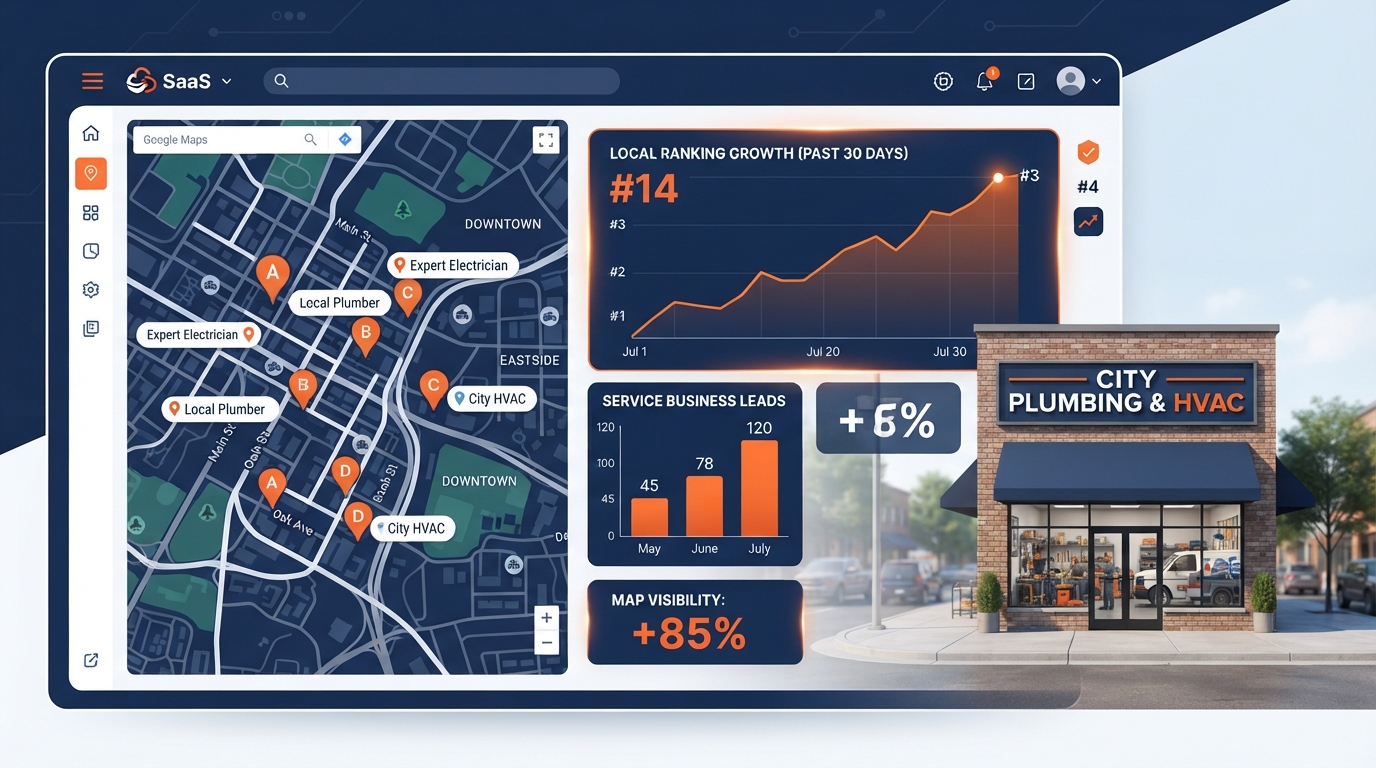
The first pillar handles how potential customers find your business. This includes your website, local SEO, Google Business Profile, paid advertising, and AI search visibility. In a Growth OS, every traffic source is tracked and measured against revenue, not just clicks or impressions. You know exactly which channels produce paying customers and which ones produce window shoppers.
2. Convert: Turn Demand Into Customers
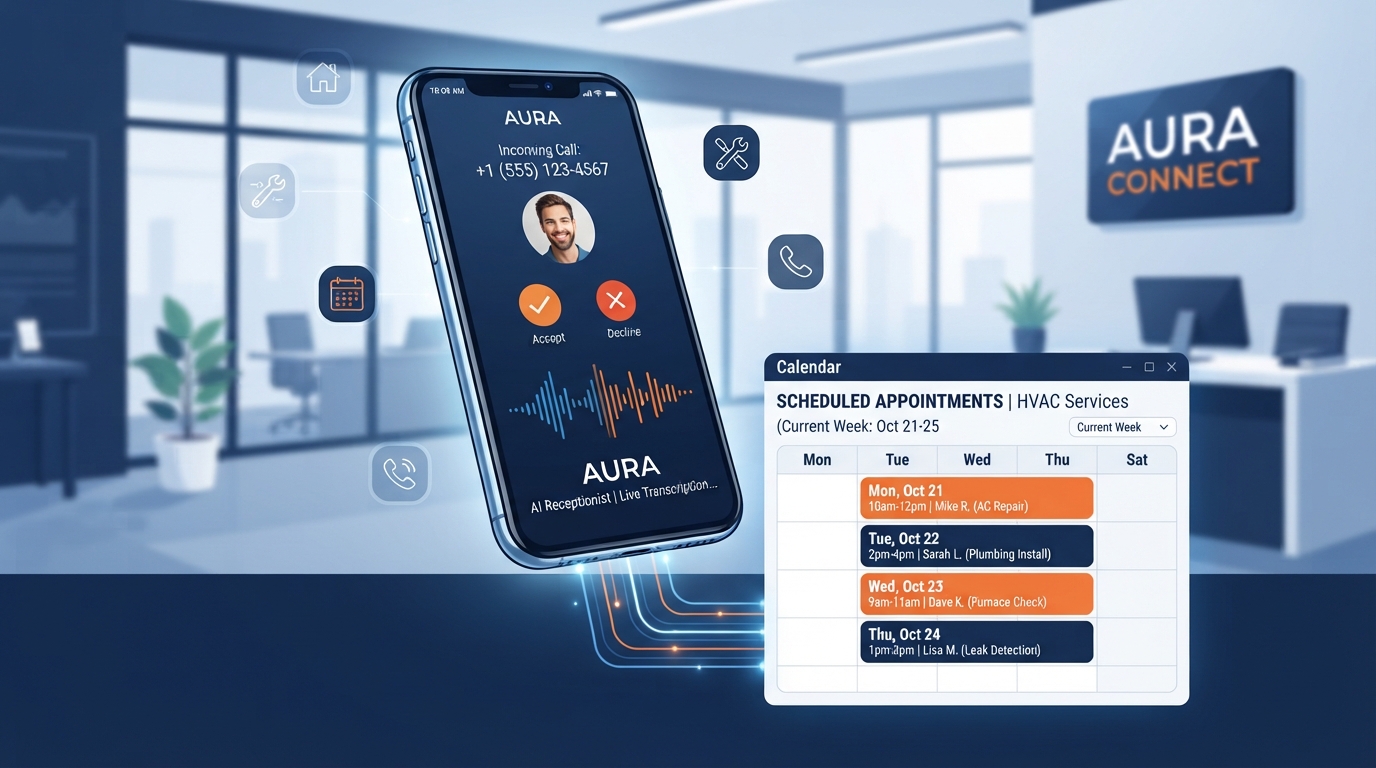
The second pillar handles what happens when a prospect makes contact. This includes your CRM, lead qualification, AI receptionist, appointment booking, and follow-up automation. In a Growth OS, every enquiry is captured, qualified, and responded to within minutes, not hours. No lead falls through the cracks because the system handles follow-up automatically.
3. Operate: Deliver at Scale
The third pillar handles how you deliver your product or service efficiently. This includes workflow automation, scheduling, dispatch, customer communication, reporting, and business intelligence. In a Growth OS, operational tasks that used to require manual work happen automatically. Your team spends time on customers, not on admin.
What a Growth OS Replaces
When a Growth OS is fully implemented, it typically replaces 5-12 separate subscriptions and tools. Here is what gets consolidated:
- Website platform and CMS (replaced by a growth-focused website built into the system)
- Standalone CRM (replaced by a unified CRM that connects to every touchpoint)
- Email marketing tool (replaced by automated sequences triggered by customer behaviour)
- Booking and scheduling tool (replaced by an integrated booking engine)
- Analytics and reporting tools (replaced by a unified dashboard showing revenue attribution)
- Review management tool (replaced by automated review requests after job completion)
- Call tracking software (replaced by integrated call tracking tied to lead source)
- Lead capture forms and landing page builders (replaced by conversion-optimised pages built into the system)
How a Growth OS Differs From Buying Software
The key distinction is this: buying software gives you tools. A Growth OS gives you outcomes. When you buy a CRM, you get a database. When you buy an email tool, you get a sending platform. When you buy an ad management tool, you get a dashboard. You still have to connect them, configure them, and manage the data flow between them.
A Growth OS comes pre-connected. The website feeds leads into the CRM automatically. The CRM triggers follow-up sequences automatically. The booking system syncs with the calendar automatically. The reporting dashboard pulls revenue data from every source automatically. You do not buy a Growth OS the way you buy software. You have it built, implemented, and managed as a complete infrastructure.
The Financial Case for a Growth OS
The financial argument for a Growth OS comes down to three numbers: acquisition cost, conversion rate, and operational efficiency.
Lower Customer Acquisition Cost
When every marketing channel is tracked against revenue, you can reallocate budget from channels that produce clicks to channels that produce customers. Businesses that implement proper revenue attribution typically reduce their customer acquisition cost by 20-40% within the first 90 days, because they stop spending on channels that look productive but do not actually generate revenue.
Higher Conversion Rate
When every lead is captured, qualified, and followed up automatically, your conversion rate increases. Not because your traffic is better, but because you stop losing the leads you already have. Businesses that implement automated lead follow-up see a 2x increase in conversion rate on average, according to research from the Annuitas Group.
Reduced Operational Overhead
When manual admin tasks are automated, your team can handle more volume without adding headcount. Businesses using a Growth OS typically report a 60-70% reduction in manual admin time, which means your existing team can serve more customers without hiring more staff.
2-3x
faster revenue growth reported by businesses with connected operating systems versus those running disconnected tools
Implementation: What It Takes
Implementing a Growth OS is not a software purchase. It is a business infrastructure project. Here is what a typical implementation looks like:
- Week 1-2: Audit and architecture. We map your current systems, identify the gaps, and design the connected infrastructure.
- Week 2-4: Core build. We build or rebuild the website, configure the CRM, set up lead capture, and connect the booking system.
- Week 4-6: Automation layer. We build the follow-up sequences, review automation, reporting dashboards, and operational workflows.
- Week 6-8: Integration and testing. We connect your existing tools via API, test every flow, and train your team.
- Ongoing: Optimisation. Monthly performance reviews, A/B testing, and system improvements based on real data.
The total time commitment from your leadership team is approximately 3-5 hours per week during the build phase. After launch, the system runs largely on its own, with a monthly review meeting to assess performance and plan improvements.
Who a Growth OS Is For
A Growth OS is not for every business. It is designed for established companies generating £500K to £20M annually that have outgrown the patchwork approach. If you are spending money on marketing but cannot clearly attribute it to revenue, if your team is spending hours on manual admin, or if you are losing leads because no one follows up quickly enough, a Growth OS addresses the root cause.
If your business is generating under £500K, you likely need individual services first: a better website, some local SEO, maybe some paid advertising. A Growth OS becomes valuable when you have enough volume that the connections between systems start to matter.
The Bottom Line
A Growth Operating System is the difference between having tools and having infrastructure. Tools are things you buy. Infrastructure is something you build. The businesses that will dominate the next decade are the ones that treat their growth infrastructure as a strategic asset, not a collection of subscriptions.
If you are running a £2M business on 8 disconnected tools and wondering why your growth has plateaued, the answer is not more tools. The answer is a connected system that makes the tools you already have work together.